
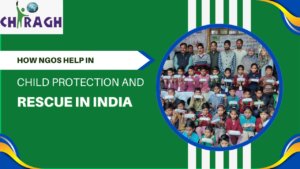
In India, many children are not safe.
Some children go missing.
Some are forced to work.
Some are trafficked.
This is where a Child Protection NGO in India plays a very important role. These NGOs work on the ground. They do not sit in offices. They go to the streets, villages, and factories. They protect children when no one else does.
One such example is Chiragh Society NGO, which works closely with children and families in Uttar Pradesh. Their work shows how NGOs save lives quietly, every single day.
Key Highlights
- NGOs rescue children who are lost, abused, or forced into labour.
- They work with police, Childline, and local authorities.
- Many rescues happen in small towns like Firozabad.
- NGOs support children after rescue, not just during rescue.
- Education and health care are part of child protection.
- Community awareness helps stop crime before it happens.
- NGOs become the voice of children who cannot speak.
Why Child Protection Is a Serious Issue in India
India has a large child population.
Sadly, many children are still unsafe.
Every year, thousands of children go missing. Some run away. Some are kidnapped. Some are trafficked for labour or other crimes. A Child Protection NGO in India steps in when systems fail.
In towns like Firozabad, children from poor families are at higher risk. NGOs like Chiragh Society NGO work as a bridge between children, police, and welfare departments.
They act fast.
They act responsibly.
How NGOs Rescue Missing and Vulnerable Children
Rescue work is not simple.
It needs trust and patience.
An NGO working for vulnerable children first receives information. It can come from locals, police, or Childline 1098. The NGO team reaches the spot quickly.
In many rescue of missing children, NGOs find kids at railway stations, factories, or unsafe homes. After the rescue, the child is taken to a safe place. Legal steps are followed.
Chiragh Society NGO has handled many such cases in Firozabad. Children were reunited with families or sent to safe homes. Rescue is only the first step. Care comes next.
Role of NGOs in Preventing Child Trafficking
Stopping crime is better than fixing damage later.
Child trafficking prevention is a big part of NGO work. NGOs spread awareness in villages. They teach parents how traffickers trap children. They explain warning signs.
An NGO in Firozabad often works in slum areas and factory zones. These places are high-risk. NGOs monitor movement. They stay alert.
Chiragh Society NGO also works with the police during raids. This teamwork helps break trafficking networks. Prevention saves many children before harm happens.
Support After Rescue: Education, Health, and Care
Rescue alone is not enough.
A child needs support to heal.
An NGO working for vulnerable children ensures schooling, medical help, and counselling. Many rescued children are weak or scared. NGOs help them feel safe again.
In Firozabad, Chiragh Society NGO helps children return to school. Some kids join formal schools. Some need bridge education first.
This long-term care makes child protection meaningful. Without support, rescue has no value.
How NGOs Work with Authorities and Communities
NGOs cannot work alone.
A Child Protection NGO in India coordinates with police, CWC, hospitals, and schools. Legal rules are followed. Every child’s case is documented.
Community support is equally important. An NGO in Firozabad trains locals to report abuse early. When people speak up, crimes reduce.
This teamwork creates real impact on the ground.
Types of Child Protection Support by NGOs
| Support Area | What NGOs Do |
| Rescue | Save missing and trafficked children |
| Legal Help | Work with the police and child welfare |
| Education | Re-enrol children in school |
| Health Care | Provide medical checkups |
| Counselling | Support emotional recovery |
| Awareness | Prevent future abuse |
Real Impact from Firozabad
In Firozabad, NGO work is not theory.
It is a daily reality.
Chiragh Society NGO has rescued children from factories and unsafe homes. Some were missing for months. Some had no documents. Step by step, their lives were rebuilt.
This is how a Child Protection NGO in India creates change. Quietly. Honestly.
Conclusion: How NGOs Help in Child Protection and Rescue in India (Ground Reality from Firozabad)
Child protection is not charity. It is a responsibility. NGOs work where fear exists. They protect children who have no voice. From rescue to rehabilitation, NGOs stay involved at every stage. The groundwork in Firozabad shows how dedicated efforts by organisations like Chiragh Society NGO can save lives and restore childhoods. Real change happens when care continues after rescue.
Quick Summary
- NGOs rescue and protect vulnerable children
- Work closely with the police and the welfare systems
- Prevent child trafficking through awareness
- Support education and health after rescue
- Create safe futures for at-risk children
FAQs
Q1. What does a Child Protection NGO in India do?
They rescue, protect, and support children who are abused, trafficked, or missing.
Q2. How do NGOs find missing children?
Through police reports, Childline calls, and local information.
Q3. Why is NGO work important in small towns?
Because children in small towns face a higher risk and fewer resources.
Q4. What role does Chiragh Society NGO play?
They rescue children, support education, and work with authorities in Firozabad.
Q5. Can communities help NGOs?
Yes. Reporting early and spreading awareness helps prevent abuse.