
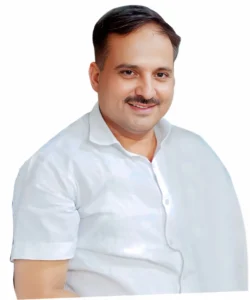
The Journey of Chiragh Society From Awareness to Transformation
In 1995, I had the opportunity to become associated with a social awareness campaign while I was still a student. The campaign deeply inspired me. I started contributing as a volunteer, and during this time, I witnessed the harsh realities of life in the slum areas of Firozabad.
The conditions were heartbreaking. There were no proper roads or drainage systems. Waterlogging and garbage were everywhere. Families struggled for clean drinking water. Most people were uneducated. Children were malnourished. Women lived restricted lives within four walls. Poverty and lack of awareness had pushed the community into darkness.
I often asked myself: What can be done to bring these deprived communities into the mainstream?
The situation was even more alarming because local mafias, moneylenders, and illegal activities had trapped innocent and poor families in their network. Fear was widespread. No one was ready to speak against them. When I decided to raise my voice, even some of my close companions stepped back. However, with the support of my father, Mohammad Saleem, my family members, and a few friends, I gathered the courage to move forward.
At that time, educating girls was considered almost a crime in some areas. But I was determined to fight this darkness of illiteracy. With the support of my younger brother Farhat Alam (who later passed away in a road accident) and my sister Shabana, we began spreading awareness. Slowly, more people joined us.
We opened night schools for children who were working during the day as child laborers. These schools helped them receive education and reconnect with the mainstream education system.
Over the next five years, while working continuously in these communities, I did not even realize how much time had passed. Gradually, society began recognizing our efforts, and I was given the title of a “social worker.” More volunteers joined us. We conducted awareness meetings at homes and organized rallies against child labor. Religious leaders were also involved to spread positive messages.
We then realized that to fight illiteracy and mafia influence more effectively, we needed to establish a formal organization. With everyone’s agreement, Chiragh Society was formed — a “lamp” to bring light into darkness.
A detailed survey revealed shocking facts. There were no qualified doctors in the area. Government and private schools were inadequate. Gambling and drug addiction were widespread. In 300 families, there was not even one high school student. The situation demanded urgent action.
The organization started advocacy work with various government departments and launched poster campaigns against gambling and drug abuse. These posters carried strong messages about how such activities destroy lives. The campaign was inaugurated by the District Magistrate and Superintendent of Police, which created strong impact. Strict action was taken against local mafias under the Gangster Act, and many were jailed. This strengthened the morale of our team.
As a result of these continuous efforts, awareness about education increased significantly. Today, many graduates and postgraduates can be found in those same areas. Thousands of children were brought back into the mainstream of education. Many of them are now working in police departments, education departments, health services, WHO, UNICEF, and various government and non-government organizations. A significant number are women who have broken social barriers and are actively contributing to family and community development.
Chiragh Society expanded its work to support abandoned, distressed, sick, injured, and homeless women and children. We also took strong action against exploitation in red-light areas and helped rescue a minor girl from Maharashtra. Legal action led to life imprisonment for the accused, and that red-light area was permanently shut down.
In 2014, the organization played a key role in eliminating child labor from glass bangle factories in Firozabad, where children were forced to work in extreme heat of nearly 1400°C. Those factories were freed from child labor.
We also reunited many missing children with their families — families who had almost lost hope. Thousands of parents blessed the organization for bringing their children back.
Today, Chiragh Society holds a respected position in Firozabad and nearby districts. It is nominated as a member in 32 district-level committees across various departments. The organization is recognized as a bridge between the administration and the public.
What began as a small lamp of hope has now become a source of light for thousands of families living in slums and backward communities.
Founder:
Dr. Zafar Alam
Founder, Chiragh Society
Sheetal Khan Road, Firozabad