
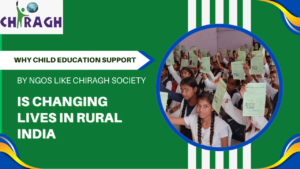
In many villages of India, education is still a struggle. Some children walk 3–4 km daily to reach school. Some drop out because their parents cannot afford books or fees. This is where child education support in India becomes very important.
When NGOs step in, things slowly start changing. An education NGO in rural India does more than just donate notebooks. It builds hope.
Organizations like Chiragh Society are working at the ground level. They understand village problems. They talk to parents. They support children in real ways.
Let’s understand how this support is changing lives.
Key Highlights
- Many rural families cannot afford proper schooling for their children.
- Child education support in India helps reduce dropout rates.
- NGOs provide books, uniforms, and sometimes fee support.
- Awareness programs motivate parents to send girls to school.
- Chiragh Society works closely with rural communities.
- Local volunteers make programs more trustworthy.
- Long-term education support creates real life change.
Education is not just about reading and writing. It is about confidence. It is about dignity. It is about giving a child a better future.
The Real Situation of Rural Education in India
In cities, children have many options. But in villages, things are different. Schools may not have proper facilities. Many parents work as daily wage laborers.
For such families, an NGO for underprivileged children becomes a support system. Sometimes even basic school bags are difficult to buy. That is why free education support for poor children matters so much.
For example, in one village in Madhya Pradesh, a girl named Rani almost left school after class 6. Her father lost his job. Through support from Chiragh Society, she received books and guidance. Today, she is in class 10. Small support made a big difference.
This is how real change starts.
How NGOs Help Children Education at Ground Level
You might wonder, what exactly do NGOs do?
Let me explain simply. How NGOs help children education depends on community needs. Some provide scholarships. Some run evening classes. Some distribute uniforms.
Many NGOs working for child education also organize parent meetings. They explain why education is important. Especially for girls.
Chiragh Society has organized school material distribution drives. They also motivate children through small events and awareness sessions. These activities may look simple. But they build confidence.
Here is a simple table to understand the type of support:
| Type of Support | What It Includes | Impact on Children |
| School Supplies | Books, bags, uniforms | Reduces financial burden |
| Fee Assistance | Partial or full fee help | Prevents dropouts |
| Awareness Camps | Parent meetings, girl education talks | Improves enrollment |
| Extra Classes | Evening tutoring support | Better academic results |
| Career Guidance | Basic counseling sessions | Builds future goals |
This is real rural child education programs impact. It is slow. But it is steady.
Why Community-Based NGOs Like Chiragh Society Matter
Large organizations do big projects. But local NGOs understand small details. They know which child needs urgent help. They know which family is struggling.
If someone searches for a child education NGO near me, they often find local groups first. That is good. Local presence builds trust.
An active education NGO in rural India works closely with teachers and village leaders. This creates accountability.
Chiragh Society focuses on community connection. They talk to parents directly. They check if children are attending school regularly. This kind of follow-up makes programs effective.
When education support continues for years, children feel stable. They do not drop out suddenly.
Long-Term Impact of Child Education Support
Let us think long term. What happens when a rural child completes school?
He or she may get a job. Or pursue higher education. The family income improves. Younger siblings also get motivated.
This is the power of child education support in India. It breaks the cycle of poverty.
An NGO for underprivileged children does not just help one student. It influences the whole family.
For example, after receiving consistent support, one boy supported by Chiragh Society later became a volunteer. Now he helps younger children with studies. That is real impact.
Education creates a chain reaction. One educated child can change an entire village’s mindset.
Conclusion: Why Child Education Support by NGOs Like Chiragh Society is Changing Lives in Rural India
Child education support in India is not charity. It is an investment in the country’s future. NGOs like Chiragh Society are helping rural children stay in school and dream bigger. Through simple but consistent efforts, lives are slowly transforming. Education gives confidence, opportunity, and hope. And hope is the strongest change-maker.
Important Points in Short:
- Rural children face financial and social barriers in education.
- NGOs provide school supplies, fee help, and awareness support.
- Chiragh Society works closely with village communities.
- Local support builds trust and reduces dropouts.
- Long-term education support changes entire families.
Frequently Asked Questions (FAQs)
1. What is child education support in India?
It includes financial help, school materials, and guidance given to rural and poor children to continue their studies.
2. How can I find an NGO near my village?
You can search online for a child education NGO near me or ask local school teachers for guidance.
3. Do NGOs only give free items?
No. Many NGOs working for child education also provide mentoring and awareness programs.
4. How does Chiragh Society support rural children?
Chiragh Society provides school materials, awareness sessions, and connects families with education resources.
5. Why is education support important in villages?
Because many families cannot afford proper schooling. Support prevents children from dropping out.
If you are a student reading this, remember one thing. Education is powerful. And when communities and NGOs come together, change is possible.